
Calls for equipment you didn’t have: how a rental counter should count them
Every rental company turns away calls for machines that are all out on jobs. Here is a simple way to log those calls, win some of them back, and use the count when you decide what to buy.
Samples and orders open January 2027.
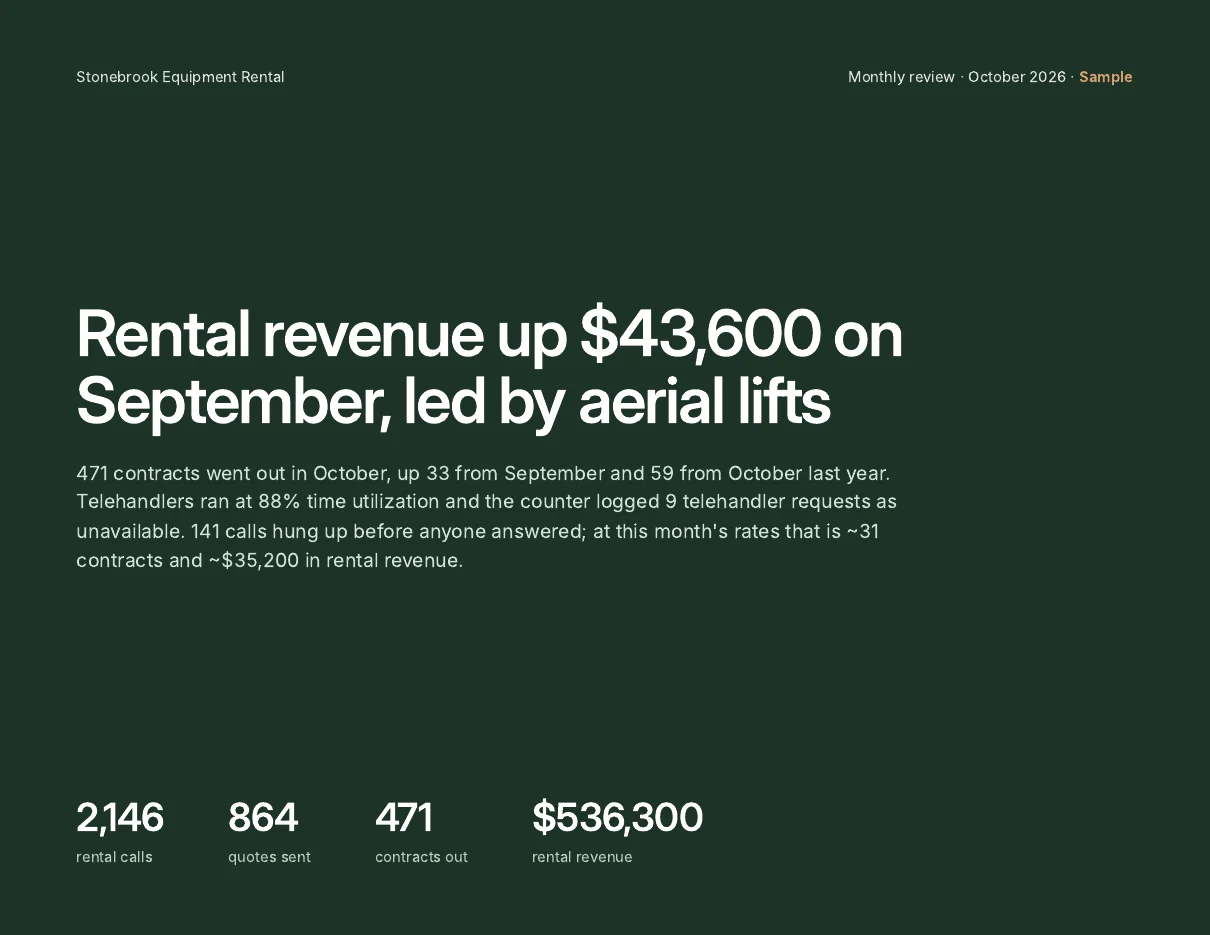
The example in this post comes from our equipment rental sample, a monthly review for Stonebrook Equipment Rental. Stonebrook is a fictional company and its figures are made up. The calls it describes are the kind every rental counter takes.
Why these calls disappear
Rental software records what went out: reservations, contracts and days on rent. A call for a telehandler when every telehandler is on a job leaves no record at all. The counter says the next one is back Thursday, the contractor calls the next yard, and the request is gone.
Utilization reports can’t see those calls either. They show how hard the machines you own worked and say nothing about the jobs you had to turn away.
In the sample month, telehandlers ran at 88% time utilization and brought in $96,400 from 21 units, the most per unit in the fleet. The counter also turned away nine telehandler requests because none were in the yard. Without a count of those nine calls, the owner would only have seen the 88%.
What to write down on each call
Keep the log short enough that the counter will fill it in during a busy morning:
| Field | Why it matters |
|---|---|
| Date and time of the call | Shows whether misses bunch up on certain days |
| Customer and phone number | So someone can call back when a unit returns |
| Equipment class and size | The count you’ll bring to the fleet meeting |
| Dates and length of rental | A two-day job and a two-month job are different losses |
| What was offered instead | A substitute still tells you which class was short |
| Who took the call | So the callback goes to someone the customer already spoke with |
One line per call is enough. A shared sheet works, and so does a clipboard next to the phone if someone types it up at the end of the day.
Call them back when a unit comes back
In the sample, Cardenas Roofing asked for a telehandler for two weeks. Luis at the counter logged it as unavailable, and the caller asked to be called the day one came back. Nine days later the request was still open.
Sort the log by equipment class. When a telehandler is checked in, whoever is at the counter looks at the telehandler lines and calls the oldest request first. Some of those contractors will have found a machine elsewhere. Some will still need one, and they will remember that you called.
The sample review put this on the list for the next month: call the nine telehandler requests as units come back, starting with Cardenas Roofing.
Bring the count to the fleet meeting
A month of these calls helps answer whether a class is busy because demand is strong or because the fleet is too small for the demand you already have. Two readings from the same sample:
- Telehandlers: 88% utilization and nine requests turned away in one month. Both point the same way, toward adding units or arranging a re-rent for the busy weeks.
- Compaction and concrete: 52% utilization, and the only class down on September. Most callers in that class asked for ride-on rollers, and the yard has four. The class as a whole looks oversupplied, while the one machine people actually wanted was short.
Neither of those shows up in a utilization report on its own.
Keep them apart from missed calls
The same counter also had 141 calls hang up before anyone answered, 58 of them before 8 AM. Those are a staffing problem with a different fix, and our missed call tracking guide covers how to count them by hour. Keep the two lists separate so the fleet meeting looks at demand and the scheduling conversation looks at coverage.
Doing this with Morning Tally
Morning Tally reads the counter’s calls and picks out the requests for equipment that wasn’t available, so nobody has to remember to log them. The monthly review counts them by class next to utilization and lists the customers still waiting. The full equipment rental sample is on the samples page, and the equipment rental page covers the rest of the report.
Common questions
Should we count a request if the customer took a different machine?
Yes, and mark it as a substitute. It still shows which class was short, and the substitute may have earned less or tied up a machine another customer needed.
Does this replace a utilization report?
No. Utilization shows how hard the machines you own worked. The request count shows demand you couldn’t serve. Read them side by side.
How long should we keep the log?
Keep at least a full year so you can compare the same month across seasons before buying or selling equipment.
Get on the January list
Samples and orders open in January 2027. Tell us your company name and phone system, and we’ll put you on the list for the first free sample reports.
Join the January list